Ever wondered how complex software systems come to life? It all starts with a powerful framework known as the system development life cycle. This structured approach guides teams from concept to deployment—and beyond.
What Is the System Development Life Cycle?

The system development life cycle (SDLC) is a comprehensive framework used to design, develop, test, and deploy information systems efficiently. It provides a clear roadmap for software and system engineers, ensuring that every phase of development is methodically planned and executed. By following SDLC, organizations reduce risks, control costs, and improve the quality of the final product.




Definition and Core Purpose
At its core, the system development life cycle is a step-by-step process for building robust, scalable, and reliable software systems. Its primary purpose is to produce high-quality systems that meet or exceed customer expectations, are completed within time and cost estimates, and are easy to maintain and enhance.
According to the IEEE Computer Society, SDLC is essential for managing complexity in software engineering projects, especially as systems grow in size and functionality.
- Ensures structured development
- Facilitates team collaboration
- Reduces project risks
Historical Evolution of SDLC
The concept of the system development life cycle dates back to the 1960s, when large-scale business systems and databases began to emerge. As computing power grew, so did the need for a formalized approach to manage software projects.
Early versions of SDLC were heavily influenced by manufacturing and engineering models, particularly the waterfall model. Over time, the framework evolved to accommodate rapid changes in technology and user demands, giving rise to agile, iterative, and hybrid methodologies.
“The SDLC is not just a process—it’s a philosophy of disciplined software creation.” — Dr. Barry Boehm, Software Engineering Pioneer
The 7 Key Stages of the System Development Life Cycle
Understanding the system development life cycle means diving into its seven foundational stages. Each phase plays a critical role in transforming an idea into a fully functional system. Skipping or rushing through any stage can lead to costly errors, security flaws, or user dissatisfaction.
1. Planning and Requirement Analysis
This is the foundation of the entire system development life cycle. During this phase, stakeholders—including clients, project managers, and developers—collaborate to define the project’s scope, objectives, and requirements.
Key activities include:
- Gathering functional and non-functional requirements
- Conducting feasibility studies (technical, economic, operational)
- Identifying risks and constraints
- Defining project timelines and budgets
A well-documented Software Requirements Specification (SRS) document is typically produced at the end of this stage. This document becomes the blueprint for all subsequent phases in the system development life cycle.
For best practices in requirement gathering, visit Scrum.org, which outlines how agile teams handle dynamic requirements.
2. System Design
Once requirements are clear, the next step in the system development life cycle is system design. This phase translates user needs into a technical architecture.
Designers create models that define:
- System architecture (e.g., client-server, microservices)
- Database structure and data flow
- User interface (UI) mockups
- Security protocols and integration points
The output is a System Design Specification (SDS) document, which guides developers during the coding phase. This stage ensures that the system is scalable, secure, and aligned with business goals.
Tools like UML (Unified Modeling Language) and ER diagrams are commonly used to visualize system components.
3. Implementation (Coding)
This is where the actual development happens. Developers write code based on the design specifications, building the system module by module.
Key considerations during implementation include:
- Choosing the right programming languages and frameworks
- Following coding standards and best practices
- Integrating third-party APIs and libraries
- Conducting unit testing for each component
In modern development environments, this phase often overlaps with continuous integration (CI) pipelines, where code is automatically tested and deployed to staging environments.
For insights into efficient coding practices, check out MDN Web Docs, a trusted resource for developers.
4. Testing
No system development life cycle is complete without rigorous testing. This phase ensures that the software functions as intended and is free of critical bugs.
Testing types include:
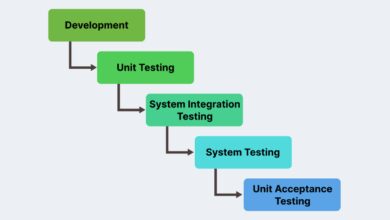
- Unit testing: Validates individual components
- Integration testing: Checks how modules work together
- System testing: Evaluates the complete system
- User acceptance testing (UAT): Confirms the system meets user needs
Automated testing tools like Selenium, JUnit, and TestNG are widely used to improve efficiency and coverage. A defect tracking system (e.g., Jira) helps manage issues throughout the process.
Testing is not a one-time event—it’s an ongoing process that continues into maintenance and updates.
5. Deployment
After successful testing, the system is ready for deployment. This stage involves releasing the software into the production environment where end-users can access it.
Deployment strategies vary based on project needs:
- Big Bang: Full release at once
- Phased: Rollout in stages
- Parallel: Old and new systems run together temporarily
- Blue-Green: Two identical environments for seamless switching
DevOps practices have revolutionized deployment, enabling continuous delivery (CD) and automated rollbacks in case of failure.
Learn more about deployment best practices at Docker’s official site, which provides containerization tools for consistent deployment.
6. Operation and Maintenance
Once live, the system enters the operation phase. This is often the longest stage in the system development life cycle, where the software is actively used and monitored.
Maintenance activities include:
- Fixing bugs reported by users
- Applying security patches
- Optimizing performance
- Adding new features based on feedback
Proactive monitoring tools (e.g., Nagios, Prometheus) help detect issues before they impact users. Regular updates ensure the system remains relevant and secure.
This phase is crucial for long-term success—many projects fail not because of poor development, but due to inadequate maintenance.
7. Evaluation and Feedback Loop
The final stage of the system development life cycle is often overlooked but vital: evaluation. This involves assessing the system’s performance against initial goals and gathering user feedback.
Key evaluation metrics include:
- User satisfaction scores
- System uptime and reliability
- Response time and scalability
- Return on investment (ROI)
Feedback is then used to initiate a new cycle of improvements, making SDLC a continuous, iterative process rather than a linear one.
This stage reinforces the idea that software is never truly “finished”—it evolves with user needs and technological advances.
Popular SDLC Models and Methodologies
While the system development life cycle outlines the stages, various models dictate how these stages are executed. Each model has its strengths and is suited to different types of projects.
Waterfall Model
The waterfall model is the oldest and most straightforward SDLC approach. It follows a linear, sequential flow where each phase must be completed before the next begins.
Advantages:
- Simple to understand and manage
- Clear documentation at each stage
- Suitable for projects with stable requirements
Disadvantages:
- Lack of flexibility for changes
- Testing occurs late in the cycle
- High risk of failure if requirements are misunderstood
Despite its limitations, the waterfall model is still used in industries like healthcare and aerospace, where regulatory compliance and documentation are critical.
Agile Model
The Agile model revolutionized the system development life cycle by introducing iterative and incremental development. Instead of delivering the entire system at once, Agile delivers working software in small, frequent releases called sprints.
Key principles from the Agile Manifesto include:
- Individuals and interactions over processes and tools
- Working software over comprehensive documentation
- Customer collaboration over contract negotiation
- Responding to change over following a plan
Agile frameworks like Scrum and Kanban are widely adopted in startups and tech companies for their flexibility and responsiveness.
“Agile is not a methodology—it’s a mindset focused on delivering value fast.” — Ken Schwaber, Co-Creator of Scrum
Iterative and Spiral Models
The iterative model builds the system in cycles, with each iteration producing a working version of the software. The spiral model combines iterative development with risk analysis, making it ideal for large, complex, or high-risk projects.
Both models allow for:
- Early delivery of partial functionality
- Continuous risk assessment
- Adaptation based on user feedback
These models are particularly effective when requirements are expected to evolve over time.
Benefits of Following the System Development Life Cycle
Adopting a structured system development life cycle offers numerous advantages for organizations, developers, and end-users alike.
Improved Project Management
SDLC provides a clear framework for planning, scheduling, and tracking progress. Project managers can set milestones, allocate resources efficiently, and monitor deliverables at each stage.
This structured approach reduces ambiguity and helps prevent scope creep—the uncontrolled expansion of project requirements.
Higher Quality Deliverables
By enforcing rigorous testing and review processes, the system development life cycle ensures that software is reliable, secure, and performs as expected.
Quality assurance is built into every phase, from requirement validation to post-deployment monitoring.
Cost and Time Efficiency
While SDLC may seem time-consuming upfront, it actually saves time and money in the long run. Early detection of flaws reduces expensive rework later in the project.
Studies by the Software Engineering Institute (SEI) show that fixing a bug during maintenance can cost up to 100 times more than during the design phase.
Challenges and Limitations of SDLC
Despite its many benefits, the system development life cycle is not without challenges. Understanding these limitations helps organizations adapt and improve their processes.
Rigidity in Traditional Models
Linear models like Waterfall can be too rigid for dynamic environments. If user requirements change mid-project, it’s difficult and costly to go back and revise earlier stages.
This inflexibility has led many organizations to adopt hybrid models that combine structure with agility.
Resource Intensity
SDLC requires significant investment in time, personnel, and tools. Smaller teams or startups may struggle to implement all phases thoroughly.
However, lightweight versions of SDLC—such as Lean and Minimum Viable Product (MVP) approaches—can help balance rigor with speed.
Over-Documentation
In some cases, SDLC can lead to excessive documentation, slowing down development. While documentation is important, it should not become a bottleneck.
Agile teams often prioritize working software over comprehensive documentation, striking a balance between structure and efficiency.
Best Practices for Implementing SDLC
To get the most out of the system development life cycle, organizations should follow proven best practices that enhance collaboration, quality, and adaptability.
Engage Stakeholders Early and Often
Stakeholder involvement is crucial throughout the system development life cycle. Regular feedback sessions ensure that the system aligns with business goals and user needs.
Tools like user stories, personas, and journey maps help bridge the gap between technical teams and end-users.
Adopt DevOps and Automation
Integrating DevOps practices—such as continuous integration, continuous delivery, and automated testing—can significantly improve the efficiency of the system development life cycle.
Automation reduces human error, speeds up deployment, and enables faster feedback loops.
Explore Jenkins for open-source automation server solutions that support CI/CD pipelines.
Monitor and Iterate Continuously
The system development life cycle doesn’t end at deployment. Continuous monitoring, user feedback, and iterative improvements are essential for long-term success.
Using analytics tools (e.g., Google Analytics, New Relic) helps track system performance and user behavior, guiding future enhancements.
Future Trends in the System Development Life Cycle
As technology evolves, so does the system development life cycle. Emerging trends are reshaping how software is developed, tested, and maintained.
AI and Machine Learning Integration
Artificial intelligence is being used to automate various SDLC phases—from requirement analysis using natural language processing to predictive testing and bug detection.
AI-powered tools can analyze code for vulnerabilities, suggest optimizations, and even generate test cases, reducing manual effort and improving accuracy.
Low-Code and No-Code Platforms
These platforms allow non-developers to build applications using visual interfaces, accelerating the development process. While not suitable for all projects, they are transforming how small-scale systems are developed.
Platforms like Microsoft Power Apps and OutSystems are gaining popularity in enterprise environments.
Shift-Left Security
Security is no longer an afterthought. The shift-left approach integrates security testing early in the system development life cycle, reducing vulnerabilities and compliance risks.
DevSecOps—a combination of DevOps and security—ensures that security is embedded in every phase, from design to deployment.
Learn more about secure development at OWASP, a global community focused on improving software security.
What is the main goal of the system development life cycle?
The main goal of the system development life cycle is to produce high-quality software systems that meet user requirements, are delivered on time and within budget, and are easy to maintain and scale.
Which SDLC model is best for projects with changing requirements?
The Agile model is best suited for projects with changing requirements, as it emphasizes flexibility, iterative development, and continuous customer feedback.
How does SDLC improve software quality?
SDLC improves software quality by enforcing structured processes, thorough testing, early defect detection, and continuous review at every stage of development.
Can SDLC be used for small projects?
Yes, SDLC can be adapted for small projects by using lightweight methodologies like Agile or Lean, which maintain structure while reducing overhead.
What happens after a system is deployed in the SDLC?
After deployment, the system enters the operation and maintenance phase, where it is monitored, updated, and improved based on user feedback and performance metrics.
The system development life cycle is a powerful framework that brings discipline, clarity, and efficiency to software development. From planning to evaluation, each stage plays a vital role in delivering successful systems. While traditional models offer structure, modern approaches like Agile and DevOps provide the flexibility needed in today’s fast-paced digital world. By understanding and applying the principles of SDLC, organizations can build software that is not only functional but also sustainable and user-centric.
Further Reading: